


Localisation engineering
Exporting content for translation and importing it back afterwards
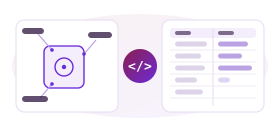
We handle the technical side of the workflow between layout and translation: we extract from the files whatever needs to be translated, and after translation we put the content back in place. We control the process and check the final result.
Where text hides
Not just in paragraphs. In graphics and technical drawings, in fields and variables, in tables embedded from other sources, in structured data, in exports from content management systems. A translation tool will usually miss it, so it has to be extracted separately — so that it goes back to its place after translation.
If a file is not editable and nothing can be exported from it, we rebuild it first.
Import depends on export
A file that goes to translation carries every error from the earlier stages with it. If the export is right, the import falls into place and the work ends with a check. If not — every language version has to be fixed separately.
That is why we give the export the most attention. We close every round trip by comparing the source file with the one that came back after translation.
With many language versions
When the same round trip repeats for a dozen or more languages, our scripts and tools take over the repetitive stages — we build them for the project at hand. Fewer places for errors, and a correction made once carries through to every version.
What you get
Files ready to pass on — to translation or to layout, depending on the stage. Complete, with their structure and links intact.
Get in touch with us
Tell us what your workflow looks like, or send us a sample file. We will check free of charge what can be extracted from it and whether it will go back in place without losses.